Neighboring states sell cannabis in storefronts. Hemp shops in Raleigh sell products that look and feel like marijuana. It is reasonable to assume the rules have loosened here. They have not. Marijuana possession laws in North Carolina still carry criminal penalties in 2026, and the gap between what is available and what is legal is where people get charged.
Here is where the law actually stands and what a possession charge means.
Is Marijuana Legal in North Carolina?
No. Marijuana remains illegal in North Carolina for both recreational and medical use.
There is no statewide medical marijuana program, no adult-use law, and no state-licensed dispensaries. Cannabis containing more than 0.3 percent delta-9 THC by dry weight is a Schedule VI controlled substance under state law.
The one narrow state exception is the 2014 Epilepsy Alternative Treatment Act, which permits patients with intractable epilepsy to use a low-THC, high-CBD hemp extract. That is not a functioning medical program and does not authorize flower, edibles, or general patient access.
What Are the Penalties for Marijuana Possession?
Penalties scale sharply with weight under N.C.G.S. 90-95:
- 0.5 ounce or less: Class 3 misdemeanor, punishable by a fine of up to $200, with any jail sentence suspended
- More than 0.5 ounce up to 1.5 ounces: Class 1 misdemeanor
- More than 1.5 ounces: Class I felony
- 10 pounds or more: trafficking, carrying mandatory minimum sentences
Sale or delivery of any amount is a Class H felony, regardless of quantity. Possession with intent to sell or deliver is charged separately from simple possession, and prosecutors sometimes infer intent from packaging, scales, cash, or messages rather than weight alone.
Drug paraphernalia related to marijuana is charged under N.C.G.S. 90-113.22A as a Class 3 misdemeanor.
Trafficking charges rest on weight, not on any proof that you meant to sell. The North Carolina Department of Revenue may also assess an unauthorized substance tax on top of criminal penalties at trafficking quantities.
Is Small-Amount Possession Really Decriminalized?
Partly, and the word does more work than it should.
North Carolina reduced the penalty for half an ounce or less back in 1977. For a Class 3 misdemeanor with few or no prior convictions, the punishment is a fine rather than active jail time. People hear that and conclude nothing happens.
Something does happen: you get a criminal record. A Class 3 misdemeanor is a criminal conviction that appears on background checks run by employers, landlords, and schools. Court costs typically exceed the fine itself. For students, a drug conviction can affect financial aid, and for non-citizens it can carry immigration consequences.
Enforcement also varies by county. Some district attorneys deprioritize simple possession while others charge it routinely. Local practice is not the same as legal protection, and state law preempts any local attempt to formally decriminalize.
What About Hemp, Delta-8, and THCA Products?
This is the area causing the most trouble right now.
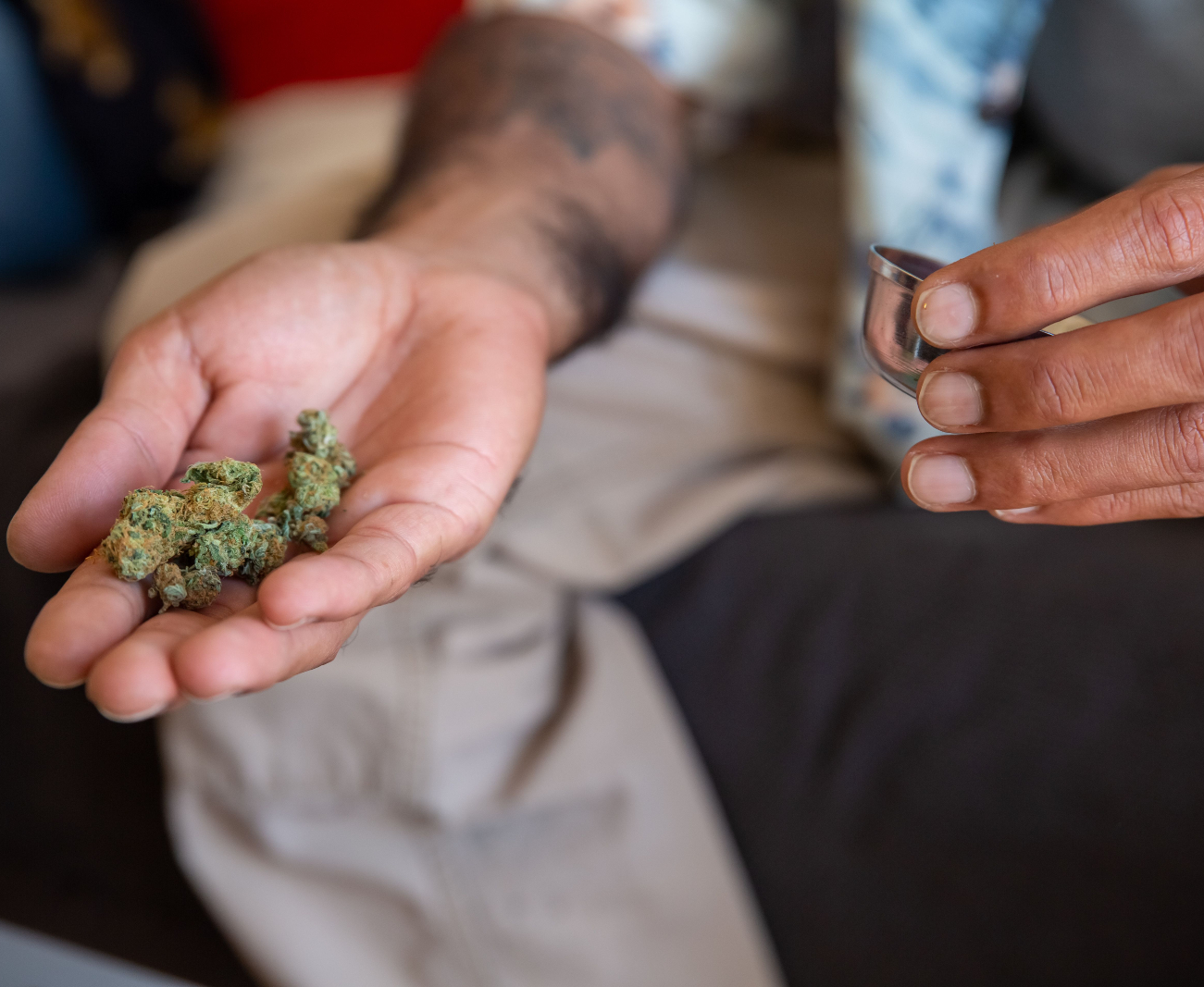
Hemp-derived products containing less than 0.3 percent delta-9 THC have been legal under state and federal law, which is why delta-8, THCA flower, and hemp beverages sell openly in North Carolina shops. The problem is practical: an officer in the field cannot distinguish legal hemp flower from illegal marijuana. They look identical and smell identical. Lab testing settles it, sometimes weeks after an arrest.
People carrying lawfully purchased hemp products do get arrested, and charges are sometimes dismissed later once testing comes back. That is cold comfort after a night in custody.
A significant change is also coming. A federal hemp redefinition enacted in November 2025 takes effect November 12, 2026, and is expected to make most intoxicating hemp-derived products federally unlawful unless Congress acts. Anyone in this market should treat the current situation as unsettled.
Keeping receipts and original labeled packaging is genuinely useful if you buy hemp products.
What About the Cherokee Dispensary?
There is one place in North Carolina where adults can legally purchase cannabis: the Qualla Boundary, where the Eastern Band of Cherokee Indians operates a dispensary under tribal sovereignty following a 2023 tribal referendum.
That authority is tribal, not state. Cannabis purchased there does not become legal once you drive off tribal land. Carrying it into the rest of the state exposes you to the same charges as any other marijuana possession.
Could North Carolina’s Law Change?
Possibly, and there has been movement worth tracking.
Governor Josh Stein created a state Advisory Council on Cannabis by executive order in June 2025, tasked with recommending a framework for regulating THC products. The council approved an interim report in April 2026 recommending legalization and regulation of THC products. Legislation to legalize adult use, including House Bill 413, has been filed in the General Assembly.
None of that has changed the law. Medical cannabis bills have passed the state Senate more than once without receiving a House vote. Until a bill is enacted, current penalties apply, and pending legislation is no defense to a charge.
What Options Exist If You Are Charged?
A first marijuana charge is often resolvable without a lasting conviction.
- Conditional discharge under N.C.G.S. 90-96 is available for many first-offense possession and paraphernalia charges. Complete the requirements and the charge is dismissed rather than entered as a conviction.
- Dismissal on the merits may follow where the search was unlawful, possession cannot be tied to you, or lab results show a legal hemp product.
- Constructive possession challenges matter when the item was found in a shared car or residence rather than on your person.
- Expungement may be available afterward, which is why avoiding a conviction in the first place is worth the effort.
If the charge involves growing rather than possessing, marijuana cultivation is treated as manufacturing and carries considerably higher exposure.
Holding a Marijuana Charge in North Carolina? Weigh Your Options
The short version for 2026: marijuana is illegal here, small amounts carry a fine plus a permanent record, and weight thresholds escalate quickly into felony and trafficking territory. Hemp products are legal but hard to distinguish in the field, and the federal rules governing them shift in November.
If you are facing a charge:
- Say nothing about the substance to officers without a lawyer
- Keep receipts and packaging for any hemp product involved
- Ask whether your case qualifies for a 90-96 conditional discharge
- Do not assume a fine-only offense is harmless to your record
- Get the search and the lab results reviewed
Our drug crime attorneys handle marijuana and possession cases across Wake County and can tell you quickly what your realistic options are. Reach out for a confidential review before your court date.
This article is general information about North Carolina law and is not legal advice for your specific situation.
Author Bio

J. RUSSELL W. DeMENT III
RALEIGH CRIMINAL DEFENSE LAWYER
Russell W. “Rusty” DeMent III is a trial lawyer and managing partner at DeMent Askew Johnson & Marshall. A former Wake County Assistant District Attorney, he brings decades of courtroom experience to defending serious criminal charges in both state and federal courts, including DWI, violent crimes, and drug offenses.
Regularly recognized in Best Lawyers in America, Super Lawyers, and Business North Carolina’s Legal Elite, Rusty is a Fellow of the National College for DUI Defense and the Litigation Counsel of America. His legal insight and calm command in high-stakes cases make him a trusted advocate across North Carolina.

 5.0
rating



 5.0
rating