The screen comes back positive and your mind jumps straight to a cell. That is rarely what happens next. A failed drug test on probation in North Carolina is treated as a technical violation, and technical violations sit in a different legal category than the ones that send people to prison.
That does not make it minor. It starts a process, and how you handle the next few weeks affects the outcome considerably.
Can You Go to Prison for a Failed Drug Test?
Not for the failed test alone.
Since the Justice Reinvestment Act, a court cannot revoke probation and activate your suspended sentence for a technical violation. Under N.C.G.S. 15A-1344, revocation requires one of three things:
- A new criminal offense more serious than a Class 3 misdemeanor
- Absconding from supervision
- Two prior periods of confinement already served for violations
A positive drug screen is none of those. Possession of a controlled substance, though, is a crime, so a test result can occasionally lead to a new charge, which changes the analysis entirely. In the ordinary case, the test result stands alone as a condition violation.
What Happens Immediately After a Positive Test?
Your probation officer has discretion, and not every positive screen produces a court date. Common responses, roughly in order of severity:
- A warning and a documented conversation
- Increased testing frequency
- A referral for a substance abuse assessment or treatment
- A delegated authority response, where the officer imposes conditions without going to court, which can include added community service, curfew, or a short period of confinement
- A violation report filed with the court, setting a hearing
Officers often escalate on pattern rather than on a single result. One positive with an honest response and voluntary treatment enrollment frequently lands very differently than a third positive with denials in between.
What Can the Judge Do at a Violation Hearing?
If it reaches court, the judge’s options for a technical violation are:
- Continue probation unchanged with a warning
- Modify conditions, adding treatment, monitoring, testing, or community service
- Extend the probation period
- Order a “quick dip” of two or three days in jail, capped at 18 days total across the probation
- Impose a CRV period, up to 90 days for a felony probationer, though this is no longer used for most misdemeanor sentences under structured sentencing
Jail is available for a technical violation. It is not required, and it is not the default for a first positive test where the person is otherwise compliant and engaged in treatment.
Any confinement you do serve is credited against your suspended sentence if probation is later revoked.
Can You Challenge the Test Result?
Yes, and these challenges succeed more often than people expect. The state’s burden at a violation hearing is only to reasonably satisfy the judge that a violation occurred, but the result still has to hold up.
Worth examining:
- Confirmation testing. Field screening devices produce false positives. A presumptive positive should be confirmed by laboratory testing, and the confirmation result is what matters.
- Chain of custody. Collection, labeling, storage, and transport gaps undermine reliability.
- A valid prescription. Prescribed medication is a complete answer if properly documented. Bring the prescription and the prescribing records.
- Cross-reactivity. Certain medications and substances are known to interfere with particular immunoassay screens.
- Dilute or invalid specimens. A dilute sample is not the same as a positive result, though officers sometimes treat it as refusal.
- Timing. Some substances remain detectable long after use, including use that predated a condition taking effect.
Positive results for cannabis raise a further wrinkle now, since legal hemp products containing CBD and other cannabinoids are widely sold in North Carolina and can complicate interpretation of a screen. Keeping receipts and labeled packaging for any hemp product you use is genuinely worthwhile if you are subject to testing.
What Should You Do Right Now?
The window between the failed test and any hearing is where you have real influence.
- Get a substance abuse assessment voluntarily. Doing this before anyone orders it is the single most persuasive step available.
- Enroll in treatment and attend. Bring attendance records to court.
- Produce every clean test afterward. A stretch of negative results changes the picture materially.
- Gather your prescriptions. Current bottles, pharmacy records, and prescriber notes.
- Keep contact with your officer. Going quiet is how a technical problem becomes an absconding allegation.
- Do not stop reporting or attending anything. Compounding violations is what actually leads to confinement.
What Treatment Options Exist in Wake County?
Judges respond to structure, and there are established options to propose rather than promise.
Standard responses include outpatient substance abuse treatment, intensive outpatient programs, inpatient treatment where an assessment supports it, and increased testing paired with counseling. TASC assessment and case management is commonly used to coordinate placement.
For people whose charges stem from an underlying substance use disorder, Wake County Recovery Court is a more intensive alternative involving extended treatment, frequent court check-ins, regular testing, and recovery support meetings. It asks considerably more of participants than standard supervision, and it is aimed at breaking the cycle rather than punishing a relapse.
Framing a relapse as a treatment problem with a treatment answer, backed by an assessment already completed, gives a judge something to order other than jail.
Does Honesty Help or Hurt?
Carefully. Admitting use to your officer can support the violation report, so this is a decision to make with a lawyer rather than in the moment.
At the same time, denial in the face of a confirmed laboratory result damages credibility on everything else you say, and credibility is much of what a violation hearing turns on. There is usually a middle path: acknowledging a substance use problem and demonstrating action on it, without volunteering admissions about specific incidents. A lawyer can tell you where that line sits in your case.
A Positive Test Is Not the End of Your Probation
A failed screen is a technical violation. Standing alone, it cannot support revocation, and the realistic range runs from a warning through modified conditions to a short period of confinement. Which end you land on depends heavily on whether you treated the result as a problem to solve or a hearing to survive.
Your priorities:
- Complete a substance abuse assessment now, not after the hearing
- Start treatment and document attendance
- Collect prescription records and any hemp product documentation
- Stay in contact with your officer and keep every appointment
- Have a lawyer review the test result and the report before the hearing
Our drug crime and probation attorneys handle violation hearings across Wake County and can look at whether the result itself is defensible and what alternative a judge is likely to accept. Reach out for a confidential review.
This article is general information about North Carolina law and is not legal or medical advice for your specific situation. If you are struggling with substance use, a licensed professional can help you find appropriate treatment and support.
Author Bio
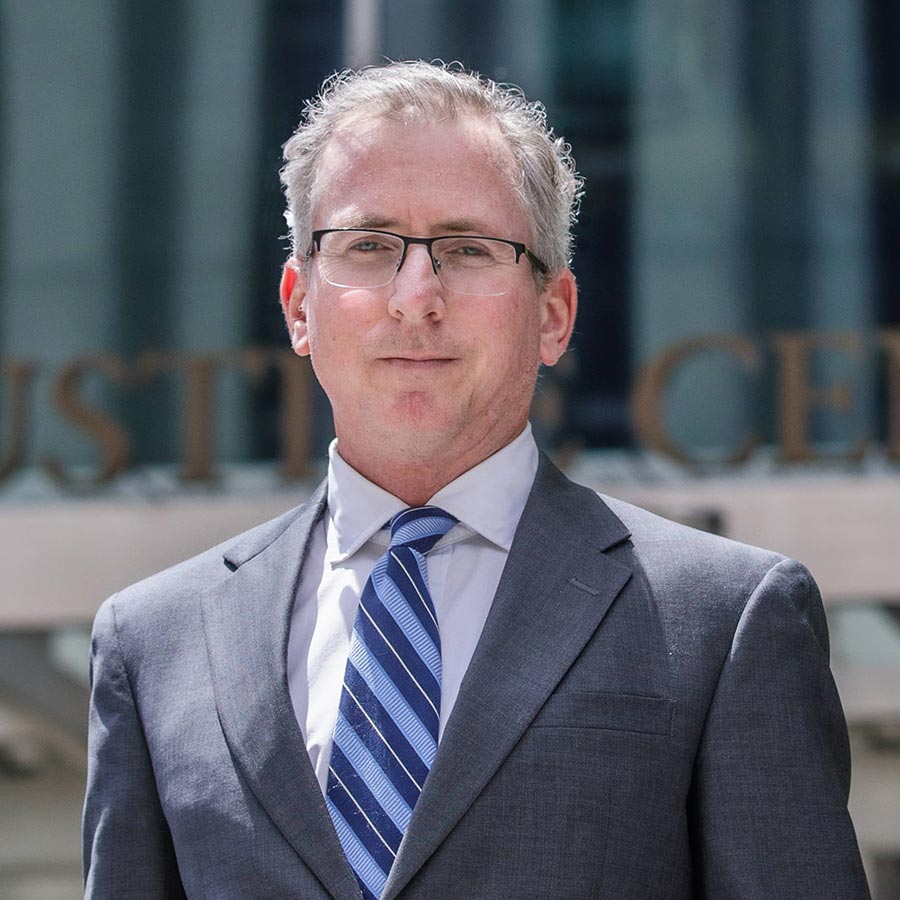
JAMES T. (JIM) JOHNSON
RALEIGH CIVIL TRIAL ATTORNEY
James T. “Jim” Johnson is a North Carolina trial lawyer with more than 30 years of litigation experience. He focuses on high-stakes civil matters, including complex injuries, medical and professional malpractice, libel and slander, civil rights violations, and commercial disputes. Before private practice, Jim served as a Wake County Assistant District Attorney and an Associate Attorney General for North Carolina, then handled insurance defense work. That background gives him an inside view of how insurers evaluate cases.
Jim is rated AV Preeminent by Martindale-Hubbell and has been recognized by North Carolina Super Lawyers, The Best Lawyers in America, and the National Trial Lawyers Top 100 Civil Litigators. He is a Fellow of the Litigation Counsel of America. He earned his B.A. from Duke University and his J.D. from the UNC School of Law.

 5.0
rating


 5.0
rating