When you violate probation in North Carolina, the case moves into a separate court process with its own deadlines, rules, and rights. It is not a new criminal trial. The standard of proof is lower, the rules of evidence are looser, and a judge, not a jury, decides the outcome.
The penalties a judge can impose depend on the type of violation, and the limits on jail time for a first probation violation are stricter on the State than many people expect. This post walks through the process itself, from the violation report to a possible appeal.
Step 1: The Probation Violation Report
Most cases begin when your probation officer files a violation report with the clerk of court. The report lists each condition you are accused of violating, such as a missed appointment, a positive drug screen, unpaid money, or a new charge.
A few rules apply at this stage:
- You are entitled to written notice. Under G.S. 15A-1345, you must receive notice of the hearing and the alleged violations at least 24 hours before the hearing.
- The report preserves the court’s authority. If the report is filed before your probation period ends, the court can still hold a hearing after the period expires.
- Each allegation stands alone. A judge can find one violation and reject another, so every item in the report is worth reviewing.
Step 2: Arrest or an Order to Appear
After a report is filed, you may receive a court date, or an order for your arrest may issue. A probation officer can also make an arrest without a written order when there is probable cause to believe a violation occurred.
If you are arrested, release conditions are generally set the same way they are in any criminal case. Two groups face stricter treatment. If you have a pending felony charge, or a conviction that requires sex offender registration, you can be held for up to seven days while a judicial official decides whether you pose a danger to the public.
Missing a probation court date can lead to an order for arrest, and it can feed an accusation of absconding, which is one of the violations that allows revocation.
Step 3: The Preliminary Hearing
If you are held in custody solely on the violation, you are entitled to a preliminary hearing within seven working days of your arrest. You can waive it, and it is not needed if the full violation hearing happens first.
At the preliminary hearing, a judge decides whether there is probable cause to believe you violated a condition. If the hearing is not held in time, you must be released to continue on probation while you wait for the full hearing.
Step 4: The Probation Violation Hearing
The violation hearing is where the court decides what happened and what to do about it. Key features include:
- A judge decides. There is no jury.
- Location. The hearing can be held where probation was imposed, where the violation allegedly happened, or where you live.
- Right to counsel. You have the right to a lawyer, and one can be appointed if you cannot afford one.
- Evidence. You can present evidence and witnesses, and you can generally confront and cross-examine the State’s witnesses unless the judge finds good cause not to allow it.
- Looser evidence rules. Formal rules of evidence do not apply, so hearsay such as an officer repeating what someone else said is often allowed.
- A lower standard of proof. The judge only needs to be reasonably satisfied that you violated a valid condition. That is far below the “beyond a reasonable doubt” standard used at trial.
Payment violations get special treatment. When the alleged violation is unpaid fines, costs, or restitution, the court looks at whether the failure to pay was willful. Proof of job loss, medical problems, or partial payments can make a real difference.
What the Judge Can Decide
If the judge finds a violation, the options generally include:
- Continuing probation with no changes
- Adding or changing conditions, such as more treatment, a curfew, or electronic monitoring
- Extending the probation period
- Ordering short jail confinement in response to the violation
- Revoking probation and activating the suspended sentence, but only for a new criminal offense, absconding, or after earlier confinement periods for prior violations
That last limit, created by the Justice Reinvestment Act, is why the type of violation matters so much. Keeping a technical violation in the technical category is one of the main ways to avoid jail for a probation violation.
Appealing a Probation Revocation
If a district court judge revokes your probation or activates your sentence, you can generally appeal to superior court for a new hearing. That right is lost if you waived your hearing in district court. A revocation ordered in superior court is appealed to the North Carolina Court of Appeals.
Appeal deadlines are short, so the decision needs to be made quickly after the hearing.
How to Prepare If You Violate Probation
- Keep reporting to your officer. Continued contact undercuts any claim that you absconded.
- Gather records. Pay stubs, treatment attendance, receipts, medical notes, and drug test results can explain or answer the allegations. If the issue is a positive screen, courts look at the circumstances of a failed drug test on probation, not just the result.
- Ask before you move or travel. Unapproved travel is a common technical violation, and the rules on traveling out of state while on probation are stricter than many people expect.
- Bring a lawyer early. A lawyer can review the report, talk with the prosecutor and probation officer, and propose a response short of jail before the hearing starts.
Walk Into Your Violation Hearing Prepared
A probation violation hearing moves quickly, and the lower standard of proof gives the State an advantage. Preparation narrows that advantage: knowing which allegations can be answered, which can be challenged, and what outcome to ask for.
If you have received a violation report in Raleigh or anywhere in Wake County, our criminal defense attorneys represent people at violation hearings and can help you prepare. Contact us for a confidential consultation.
This article is general information about North Carolina law and is not legal advice for your specific situation.
Author Bio
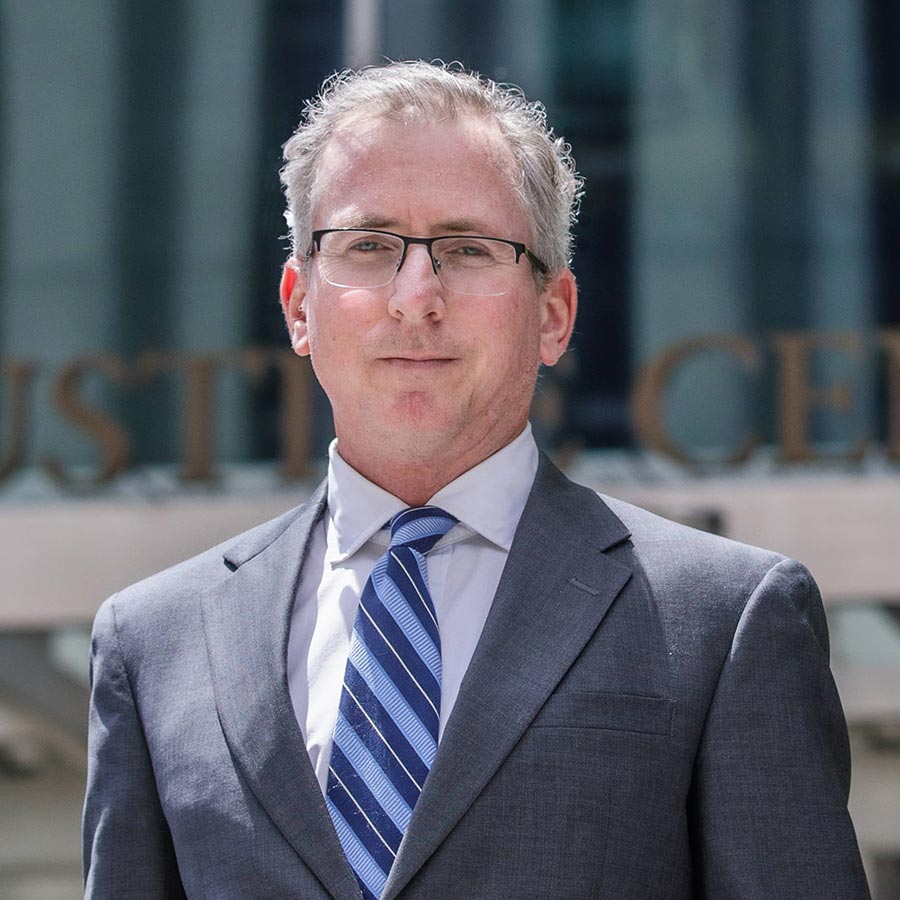
JAMES T. (JIM) JOHNSON
RALEIGH CIVIL TRIAL ATTORNEY
James T. “Jim” Johnson is a North Carolina trial lawyer with more than 30 years of litigation experience. He focuses on high-stakes civil matters, including complex injuries, medical and professional malpractice, libel and slander, civil rights violations, and commercial disputes. Before private practice, Jim served as a Wake County Assistant District Attorney and an Associate Attorney General for North Carolina, then handled insurance defense work. That background gives him an inside view of how insurers evaluate cases.
Jim is rated AV Preeminent by Martindale-Hubbell and has been recognized by North Carolina Super Lawyers, The Best Lawyers in America, and the National Trial Lawyers Top 100 Civil Litigators. He is a Fellow of the Litigation Counsel of America. He earned his B.A. from Duke University and his J.D. from the UNC School of Law.

 5.0
rating









 5.0
rating